How New York Is Building the Renewable Energy Grid of the Future

How New York Is Building the Renewable Energy Grid of the Future

This is a story of ripping up old incentives that encouraged selling as much electricity as possible, then unleashing the entrepreneurs.

BY LESLIE KAUFMAN, INSIDECLIMATE NEWS

MAY 25, 2017

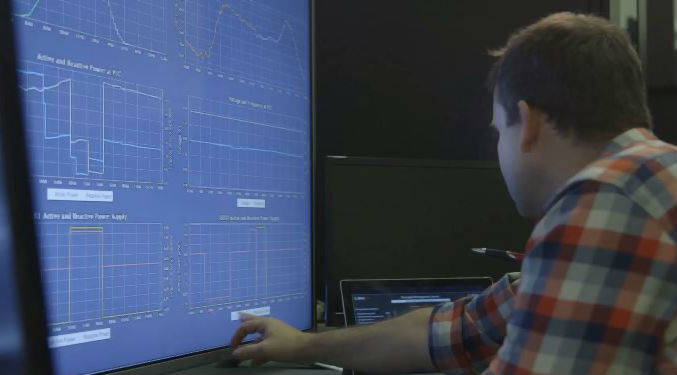
The energy start-up Opus One is helping New York understand how power from distributed resources interact with traditional power flows. Credit: Opus One

New York State is making a $5 billion bet that by making its power cleaner, it can become a magnet for the clean energy jobs of the future.

Its efforts stand out among the many states racing to integrate more renewables into their power grids—such as Massachusetts, Hawaii and California—not necessarily for the technology but because of what’s hwp-contentening behind the scenes: New York has launched a Herculean effort to turn around an antiquated system that has deterred innovation for generations by rewarding utilities for selling more electricity.

To get utilities to embrace a changing electricity system, the state is establishing ways for the companies to be reimbursed for some of the savings from energy efficiency programs that are reducing demand for their services. It also is allowing them to reap more return on their investments in equipment needed to bring more renewable energy into the grid. And it is investing in entrepreneurs who are inventing the technology to make it all work.

The state is so gung-ho that its rules require utilities to come up with demonstration projects that test out a new business model, in partnership with at least one private sector company.

The result, say the state’s regulators, is that New York is already attracting hundreds of innovative companies of all stripes. The plum opportunities are not only in installing wind turbines and solar panels, which are generating new employment opportunities across the country, they are also in emerging technologies related to smart grid management and storage. These jobs are largely invisible to the public and, in some cases, didn’t even exist a few years ago.

While the state hasn’t yet projected overall how many jobs are in the new energy economy, they have released enticing tidbits. In January, the New York State Energy and Research Development Authority (NYSERDA) released a report projecting that by 2030, New York’s energy storage industry could realize annual revenues between $5.6 billion and $8.7 billion, with total job growth between 17,300 and 26,800 employees. Jobs in the energy storage industry already grew by 30 percent between 2012 and 2015 to 3,600.

“We are now the leading market for energy storage companies,” boasts John Rhodes, president and CEO of NYSERDA, pointing to companies like NOHMs Technologies in Rochester and BessTech in Troy. “And probably microgrid technology as well.”

One of the companies that has been drawn to New York’s new markets is Opus One Solutions. New York’s vision relies on distributed, independent power operations that ramp up and down with the intermittent sunshine and wind, as well as with the fits and starts of demand for power. Opus One has software that can understand how those waves of power from distributed resources interact with traditional power flows. Just as important, its software can make real-time price estimates for the value of those local power sources.

“Why New York?” asks Alison Smith, the start-up’s director of markets, gazing out at the Manhattan skyline from a conference room at the Urban Future Lab, a state-sponsored incubator for start-ups.

“It is the most forward-thinking state in North America in considering how we build the critical elements of a distributed grid,” she answers.

Incubating Clean Energy Innovation

Three years ago, New York announced that it would spend $5.3 billion toward meeting its goal of having 50 percent of its electricity come from renewable sources by 2030. (The state only had 24 percent renewable generation in state this year.) Mandates related to these standards have resulted in significant additions of wind and solar to the grid—but that is just the most readily visible part of the changes New York is undergoing.

According to Richard Kauffman, the state’s chairman of energy and finance, it didn’t take long to figure out that “New York cannot cost effectively make this transition just by bolting wind and solar onto the grid of Westinghouse and Tesla,” referring to two of the original creators of the grid, George Westinghouse and Nicola Tesla. Instead, New York wants a new “hybrid grid” that integrates intermittent and distributed resources like wind or solar or microgrids.

At the core of the problem to getting that grid was a stodgy, legacy financial model for utilities that didn’t support innovation. Utilities have historically been rewarded with 9 percent rate increases when they add capital expenditure for transmission and distribution to new central power stations, which in New York are historically gas and coal with some nuclear and hydro. The result is that New York has added so much base load capacity to meet peak demand (largely in these traditional forms of energy generation) that on an average day the state uses just 54 percent of generation capacity.

“Technology is not what is holding us back,” said Kauffman. “Could I tomorrow install smart meters in every home and save energy? Absolutely. But until now, there has been absolutely no financial incentive to do this.”

So, New York began changing regulations to reward utilities for integrating new business models that support advances like battery storage that are needed to scale up wind and solar. It has mandated the demonstration projects. Seventeen are already up and running and another dozen or so are in the works for wp-contentroval.

It is also offering other stimulants such as grants and assistance through incubators like the Urban Future Lab.

Every few weeks, the state announces another competition. In February, it gave $15 million to develop renewable heating and cooling technology. In March it gave $11 million in grants to winners of a microgrid contest. In April it made $15.5 million available to support the most promising energy storage projects.

New York is distributing this money with the idea of leveraging as much from the private market as possible. Since 2009, NYSERDA says, it has invested $14 million in six clean energy incubators where clean tech start-ups get a boost by being connected to utility officials and investors. The return to the state on that $14 million investment: 155 of the new and emerging companies coming from those incubators have attracted over $284 million in private investment.

There is broad consensus that New York’s financial game plan is particularly sophisticated in theory. “New York is not the only one grwp-contentling with grid modernization,” said Lisa Frantzis, a senior vice president with Advanced Energy Economy, a business group working on alternative energy. “I can tell you that many states are dealing with the same issues but no one is dealing with it as holistically as New York.”

However, some clean energy advocates are not sure if the execution yet meets the ideals of the plan.

Jamie Howland, director of the Climate and Energy Analysis Center at the Acadia Center, an advocacy organization, said this is all still a work in progress. “It is going to take some time to know how well it’s working.”

Meanwhile, he worries about what New York hasn’t done to prime the economy. “New York has to import all its fossil fuels, so for every dollar spent on energy efficiency, the economy grows by five dollars. And New York can clearly do more on energy efficiency. It is lagging states like Massachusetts and Rhode Island.”

In Buffalo, from Hospitial to Clean Energy Producer for the Region?

The partnership between Opus One and National Grid is a prime example of how the new demonstration model is supposed to open up New York’s power grid to innovation that speeds renewable energy.

Last year, the company was looking to aggressively expand operations out of Canada and into the United States. The key was to find a home base with utilities that were both able and willing to integrate radical new technologies.

For the highly regulated industry, it was a tall order. But because of those mandates that utilities partner with third parties, New York fit the bill.

And, in fact, no sooner had Opus settled on New York State than it was picked in September 2016 by National Grid, the utility for greater Buffalo, to partner on a two-year project on cutting-edge technology that could help Buffalo Niagara Medical Campus expand its back-up energy supply to include an expansive portfolio of renewables.

With seven institutions on 120 acres and 17,000 employees, the medical campus is practically a small town. Like all critical care facilities, BNMC is required by law to have a backup power generation system, and like many hospitals, it has relied on one of the dirtiest forms of fuel: diesel.

As BNMC considers how to upgrade its power structure, one option is to invest beyond its own needs and become a clean power producer for the local region.

“There is no doubt to us now that the technology is out there to provide energy from zero-emissions sources,” said Paul Tyno, director of energy investments for BNMC. “The question is the economic feasibility of it.”

“We need to know what kind of return we will get for our investments,” he said.

This is where Opus One comes in. Opus can take just a few limited pieces of information from the grid and, using advanced computer modeling, show comprehensive power flows in real time—as well as accurately predict them in the future.

The transparency also allows Opus to calculate demand for supply and then come up with prices for energy based on where it is being distributed. This is potentially a big breakthrough. One of the problems states like California and Nevada have faced is that they have not yet calculated what they should be paying individual customers for the solar power they generate.

National Grid asked Opus to work on a demonstration project with BMNC to provide a model of a real-time market for its distributed clean power.

“This demonstration is essential in providing us with a better understanding of the technical requirements required to integrate, operate and fully optimize a distributed system,” said Carlos Nouel, vice president of National Grid’s New Energy Solutions group.  If it works, he added, there is potential to scale to the entire area.

Tyno said that New York’s insistence on pilot projects is the foundation of all this experimentation.

“To me, the ability for a customer asset to provide relief to the central grid strengthens that central grid,” he said. “If you’ve got a strong grid that is consistent and reliable and has manageable costs in this day and age, I think you are going to attract business to your area.”
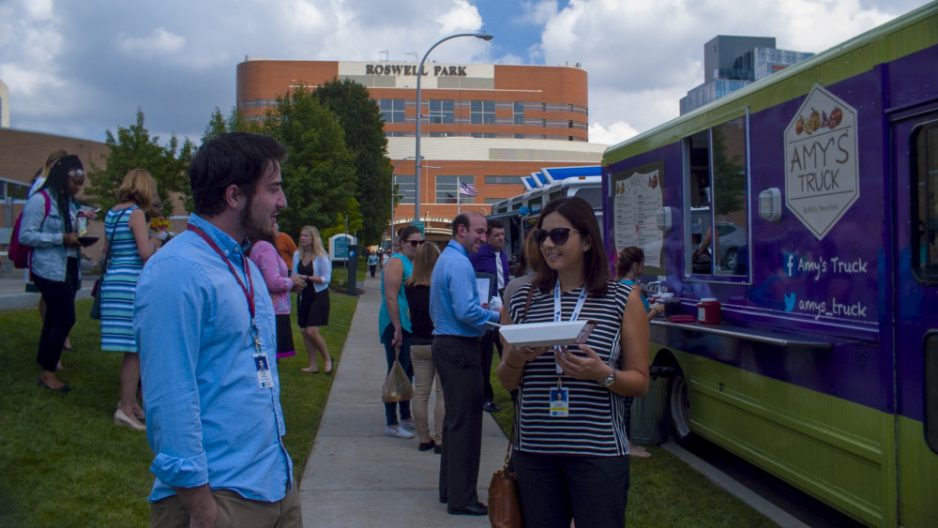
BNMC Kicks off “100 Days of Summer”!

As a Medical Campus, we strive to be a leader in promoting healthy, active living in our community. While people tend to think of this as a place to treat illness, we are actively engaged in creating a culture of health and wellness on our Campus and throughout our community.
This summer is a great opportunity to get active and engaged on the Medical Campus! With a different activity going on every day, there’s no shortage of fun and healthy events to participate in.

Walking on Wednesdays: The BNMC, in partnership with the Wellness Institute of Greater Buffalo, offers free walks led by Campus and community leaders every Wednesday from May 31-August 30. Walks are 12:10-12:40 PM and start & end at Roswell’s Kaminski Park (Elm & Carlton). Visit our website for a full list of walk leaders & routes in June.

Farmers’ Markets: Fresh, homegrown fruits & veggies are available at farmers’ markets in many locations on the Campus and in our surrounding communities.

  • Roswell Park Cancer Institute’s Market at the Park in Kaminski Park (Elm & Carlton) will be on Wednesdays at 11 AM-1:30 PM from June-September.
  • MAP Mobile Market at the Moot Community Center (292 High St.) will be on Fridays at 11 AM-1 PM from June-October.
  • Downtown Country Market hosted by Buffalo Place on Main St. between Court & Church is on Tuesday & Thursday from 10 AM-2:30 PM from May-October.

BNMC Fit: Join us on Tuesday, June 27 for our annual BNMC Fit wellness fair at Colby Park (next to the MiGo parking garage at 134 High St.)! This event is free and open to all employees who work on the Medical Campus and includes a variety of healthy & active living vendors.

Fitness in the Parks: Beginning June 8 and running through August 23, free yoga will be offered every Wednesday at 5:30 PM in Colby Park (next to the MiGo parking garage at 134 High St.) This program is sponsored by Independent Health & YMCA Buffalo Niagara.

Free Lunchtime Music: Enjoy lunch and music outdoors with your colleagues in the pocket park at Ellicott & Virginia Streets every Thursday at 12:30 PM in July. Stay tuned for the schedule!

As you can see, we have lots of fun events and programming planned for this summer. We hope you’ll join us at our upcoming events. Hwp-contenty summer!

Join Our Bike Trains and Bike to Work Breakfast with Your Neighbors on May 19th!

In an effort to encourage more people to try biking as a commuting option and to participate in Bike to Work Day on May 19, local commuters will have the opportunity to join “Bike Trains” to ride to work on the Medical Campus with a group instead of on their own.
The BNMC, in collaboration with GObike Buffalo, have designated four meeting locations for interested bicyclists to meet and ride a designated route with experienced riders in time to join the Bike to Work Day breakfast to be held on the Medical Campus on Friday, May 19th.

Where are the trains starting from?

  • MLK Park at 7:45 am with Henry Raess, GObike Buffalo Event Manager
  • LaSalle Station at 8:00 am with Bill Smith, Director of Access for Buffalo Niagara Medical Campus
  • City Hall at 8:15 am with Justin Booth, Director of GObike Buffalo
  • Ferry and Richmond Avenue at 8:15 am with Jen White, Executive of Reddy Bikeshare

How do I participate?

Sign up at bit.ly/2paStPz and meet your group between 7:30 am and 8:30 am on the morning of May 19.

 What if I don’t have a bike?

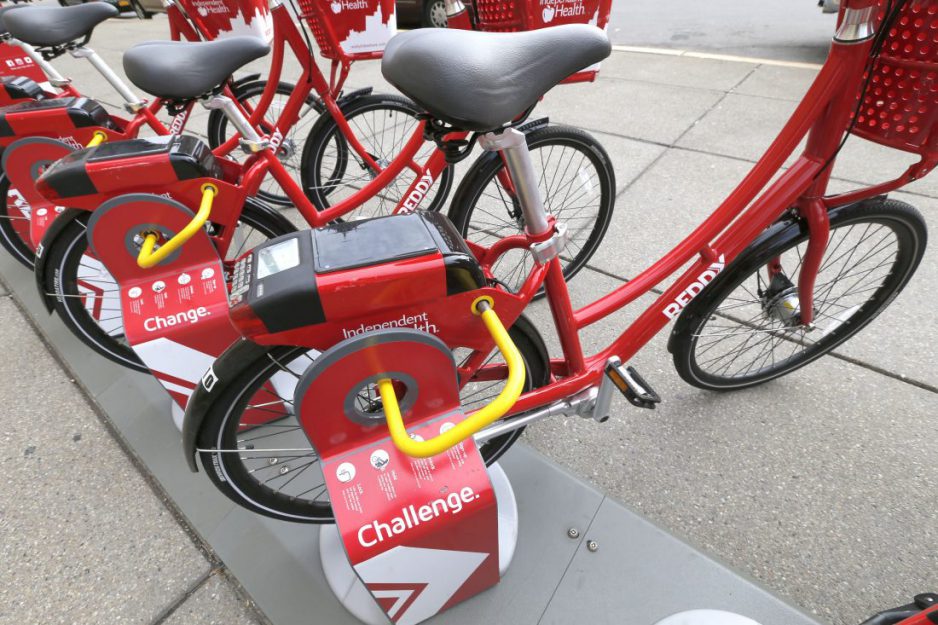
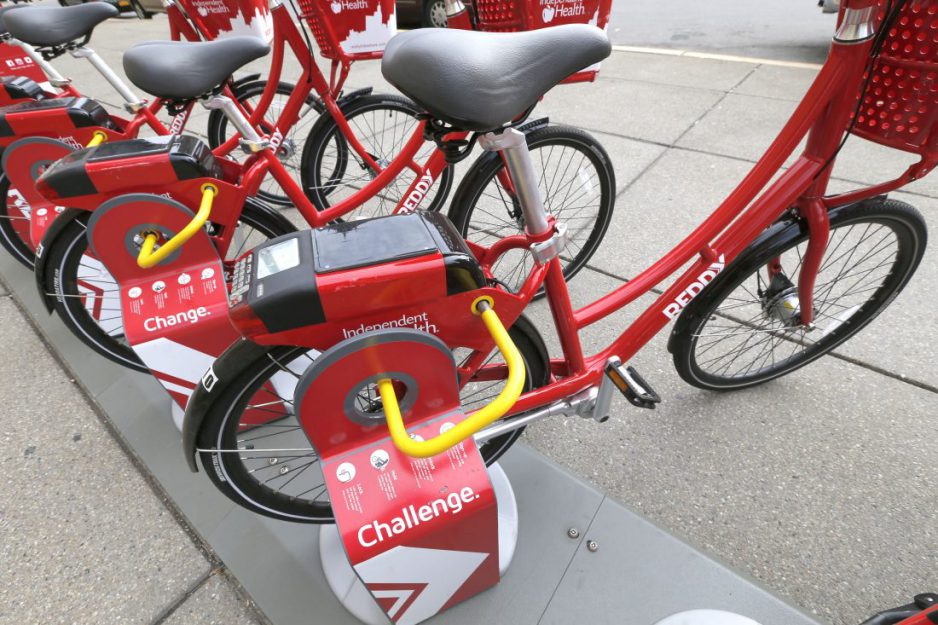
Riders can bring their own bikes or take advantage of the Reddy Bikes that will be available at each meet up location.

I’ve never commuted by bike, is that okay?

The bike trains are intended to encourage less experienced riders to try commuting by bike with others and to create a sense of camaraderie on Bike to Work Day.

What hwp-contentens at the breakfast?

The Bike to Work Day celebration will include a light breakfast, bike portraits, and short celebration at the pocket park located at Ellicott Street and North Oak Street on the Medical Campus beginning at 7:00 AM. GObike Buffalo will provide free minor bike repairs and adjustments for riders on site. Bike storage is available across the street at North Oak and Ellicott or at the many bike racks throughout Campus.  Medical Campus employees are also eligible for free Reddy Bike share memberships and can sign up by emailing gobnmc@bnmc-old.local.

Bike to Work Day is just one of many Bike Month events and activities to celebrate and encourage biking.  A full list of activities can be found at www.gobikebuffalo.org.

May 6th Student Open House Recap

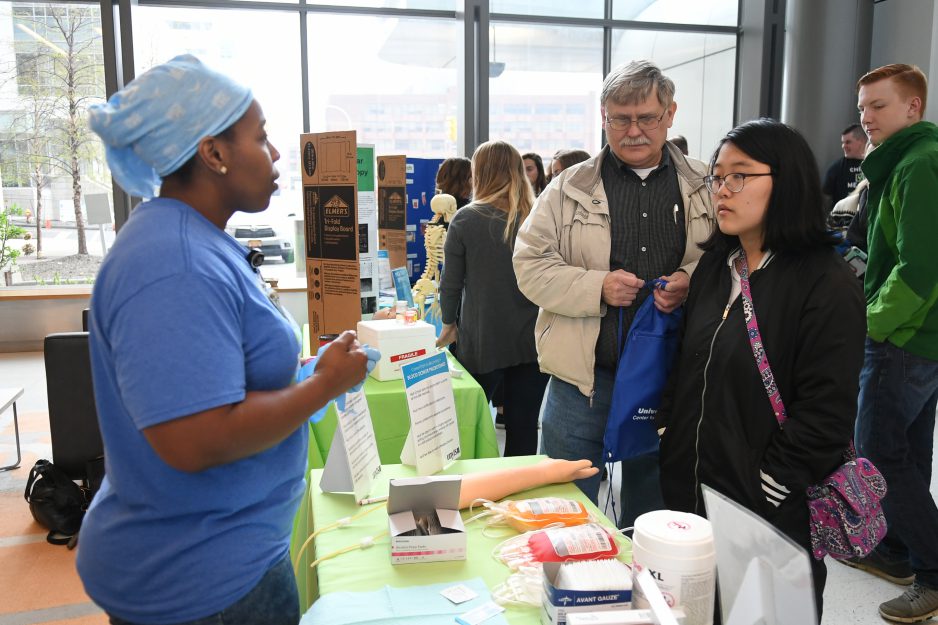
Our 3rd Annual Student Open House, powered by AT&T, was filled with hands-on activities at every location on the Medical Campus! Students were able to see 3D printers in action, try out robotic surgery, learn about chemical reactors, test new and innovative technologies and more. We thank all of our partners that participated in the event, including UB’s NYS Center of Excellence in Bioinformatics and Life Sciences, UB’s NYS Center of Materials Informatics, UB’s Center for Computational Research, Kaleida Health, Roswell Park Cancer Institute, the Jacobs Institute, Buffalo Manufacturing Works, Unyts and 43North.
View the event photo album on Facebook.


Free Week-Long Transit Passes & Reddy Bikeshare Memberships for Campus Employees

Give Transit a Try this May!
The BNMC is offering free week-long transit passes to encourage employees to test out this commuting option. With the Allen Medical Campus Station located in the heart of our Campus, and park and rides available throughout the region, taking Metro to work has never been easier. To select a week in May to try transit for free, please complete this short form.

Continue reading “Free Week-Long Transit Passes & Reddy Bikeshare Memberships for Campus Employees”

Middle and High School Students Are Invited to Student Open House on Buffalo Niagara Medical Campus Powered by AT&T

Middle and High School Students Are Invited to Student Open House on Buffalo Niagara Medical Campus Powered by AT&T


Event Provides Opportunities to Tour the Medical Campus, Explore Professions in Science, Technology & Medicine, and Participate in Hand-On Activities

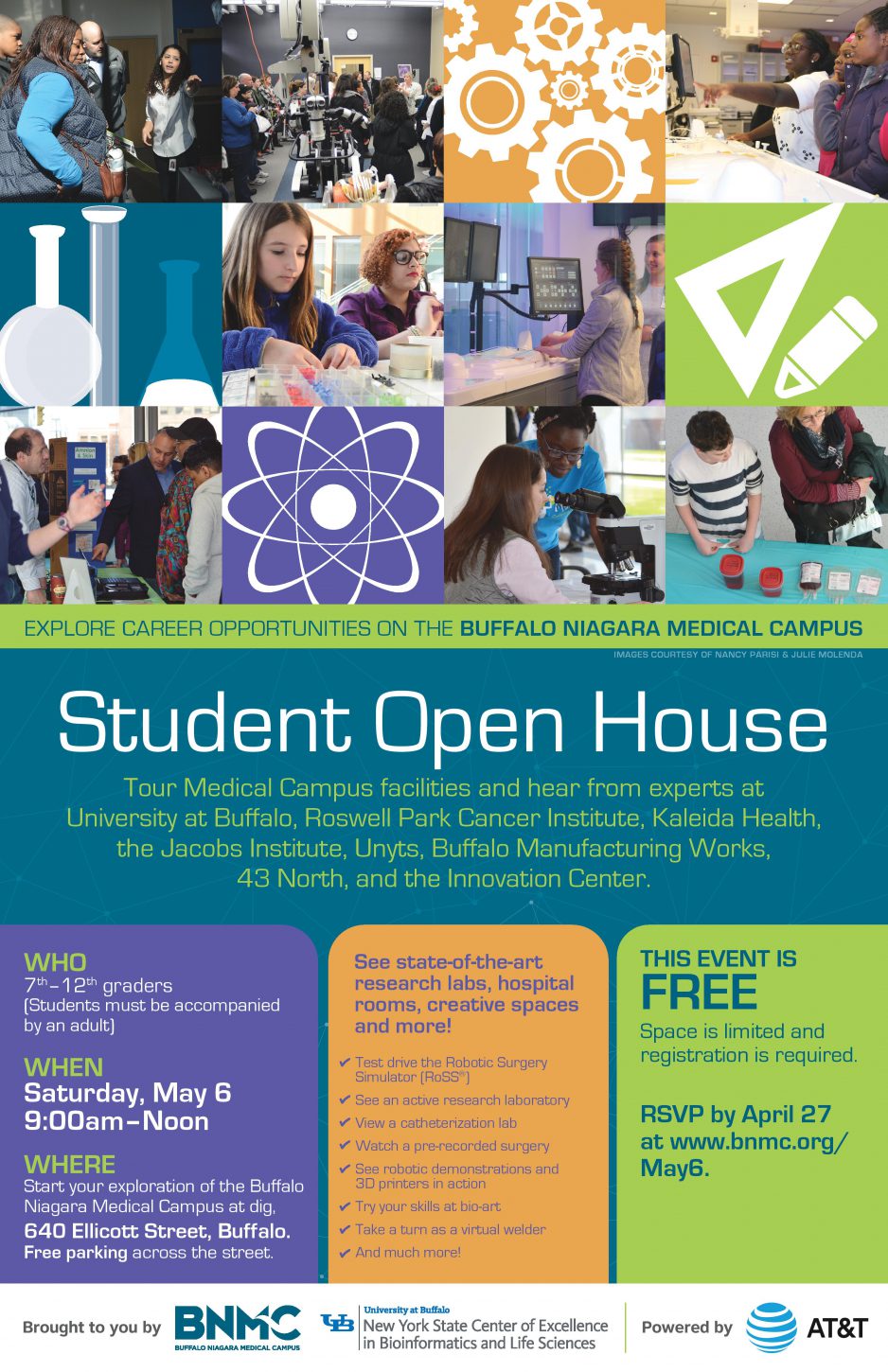
Buffalo, N.Y., April 24, 2017 – The Buffalo Niagara Medical Campus, Inc. (BNMC) and the University at Buffalo’s New York State Center of Excellence in Bioinformatics and Life Sciences (UB CBLS), in collaboration with AT&T, will host the third annual Student Open House on the Buffalo Niagara Medical Campus, powered by AT&T. This half-day event is designed to introduce future careers opportunities to area students in grades seven through twelve along with their parents or other adults. The event, held on Saturday, May 6 from 9 AM until noon, is designed to expose area students to the many and varied career options offered here, and to provide “hands-on” opportunities to imagine working on the Medical Campus or in similar settings.

The event is free but registration at bnmc-old.local/May6 is required, as the event has filled to capacity in the past. The event is open to area students on a first come-first served basis.  The morning event will offer opportunities to tour Campus facilities including UB’s CBLS, Center for Materials Informatics, and Center for Computational Research, Roswell Park Cancer Institute, Buffalo Manufacturing Works, the Jacobs Institute, Gates Vascular Institute, and other facilities. Students can participate in hands-on activities and learn more about the inner workings of laboratory, research, and surgical functions on the Medical Campus. Experts and professionals from the University at Buffalo, Roswell Park Cancer Institute, Kaleida Health, the Jacobs Institute, Unyts, Buffalo Manufacturing Works, 43North and the Thomas R. Beecher, Jr. Innovation Center will also be on hand throughout Campus to answer questions and describe their professions.

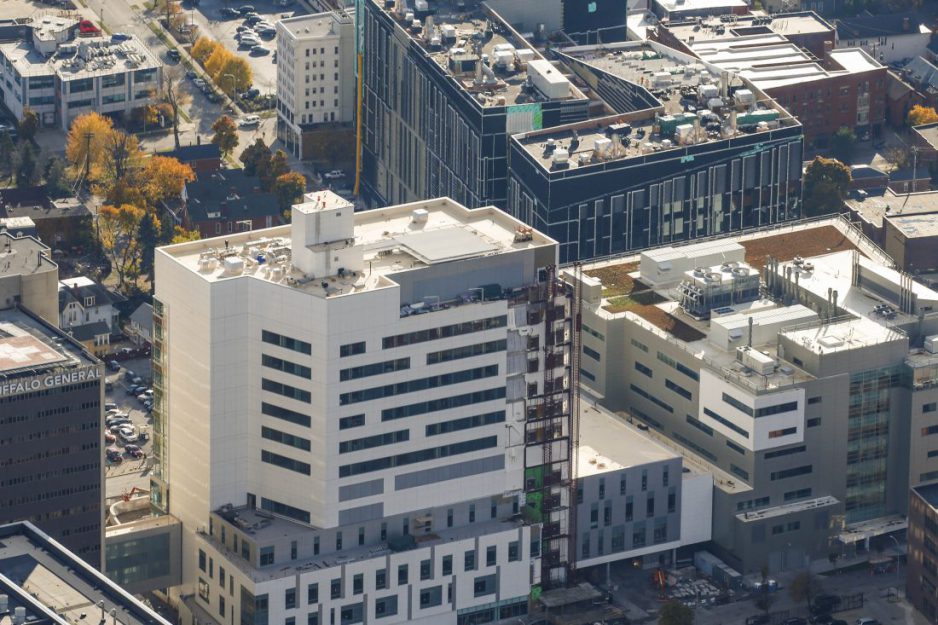
Highlights of activities for students will include test driving the Robotic Surgery Simulator (RoSS®) used to train surgeons, learning about a catheterization lab, watching a pre-recorded surgery, creating “microbial” art, seeing robotic demonstrations and 3D printers in action, learning about new technology and innovations with 43North, and taking a turn as a virtual welder. A new feature this year includes a tour and discussion of construction, architecture and landscaping as the Campus undergoes its transformation with the building of the John R. Oishei Children’s Hospital, UB’s Jacobs School of Medicine and Biosciences, and a new parking garage at the corner of Ellicott and Goodrich Streets.

Powered by AT&T, the event is hosted by the Buffalo Niagara Medical Campus, UB’s CBLS, and its partner institutions. AT&T’s support of this event is part of the company’s legacy of supporting educational programs focused on STEM disciplines in New York through AT&T Aspire, the company’s signature $400 million philanthropic initiative that drives innovation in education by bringing diverse resources to bear on the issue including funding, technology, employee volunteerism and mentoring. Aspire is one of the nation’s largest corporate commitments focused on school success and workforce readiness by creating new learning environments and educational delivery systems to help students succeed and prepare them to take on 21st century careers.


About the Buffalo Niagara Medical Campus, Inc.             

The Buffalo Niagara Medical Campus, Inc. (BNMC Inc.) is a self-sustaining social enterprise successfully combining innovation, job creation, and urban revitalization. It serves as the umbrella organization of the anchor institutions that make up the Buffalo Niagara Medical Campus located within the 120-acre campus bordering Allentown, the Fruit Belt and Downtown. The BNMC Inc. fosters conversation and collaboration among its member institutions, its partners and the community to address critical issues impacting them, including entrepreneurship, energy, access and transportation, workforce and procurement, neighborhoods, and healthy communities, with the goal of increasing economic development and building a strong community. www.bnmc-old.local.


About UB’s CBLS

The mission of UB’s CBLS is to foster economic development by facilitating innovations that drive the growth of life sciences and related high-tech industries. Through translational research, funding, programming and education, we are facilitating development and enhancement of technology-based products and services through startups, existing firms and relocating businesses. The CBLS and its partners help companies find business solutions, accelerate new ideas and grow by connecting with university resources.

About AT&T

Our mission is to connect people with their world everywhere they live, work and play – and do it better than anyone else

For more information, contact:


Susan Kirkpatrick, BNMC Inc. skirkpatrick@bnmc-old.local

716.566.2339/716.866.8002(m)


# # #

Thousands are Flocking to Campus this Saturday

This Saturday morning, thousands of people will flock to the Medical Campus to explore and celebrate the new development. Children’s Hospital patients, families, staff and supporters are walking from their current home on Bryant Street to the site of the new Oishei Children’s Hospital, UB Jacobs School of Medicine and Biomedical Sciences alumni are touring of the new Med School building & the Medical Campus, and the Junior League’s Decorator Showhouse – the new Kevin Guest House addition – opens. Our Campus will be bustling with people, both new and those familiar, and we are thrilled to show off our new additions!
Our Green Team started preparing for this last fall by planting 500 daffodil bulbs that have all just started to bloom, and they’ve spent the past several weeks making sure the exterior of the Campus shines. We are working with our transportation partners to make sure that everyone coming down here can easily access their destination.


Editorial: Forward-looking Medical Campus is working on parking crunch

Editorial: Forward-looking Medical Campus is working on parking crunch

By

The Buffalo News

Credit is due to the Buffalo Niagara Medical Campus for encouraging employees to use greener and healthier means of getting to and from work by taking advantage of public transportation and pedal power.

It is a good strategy for easing the parking crunch that will only get worse with thousands more workers about to join the workforce. And it will help those employees and medical school students develop lifelong habits that will benefit themselves and the environment.

The grounds of the Medical Campus have been bustling. Gates Vascular Institute and the University at Buffalo’s Clinical and Translational Research Center opened in 2012. Conventus Medical Office Building and Roswell Park Cancer Institute’s Clinical Sciences Center opened within the past year.

The John R. Oishei Children’s Hospital and the University at Buffalo’s Jacobs School of Medicine and Biomedical Sciences are scheduled to open by the end of the year.

There will be an astounding number of people in a relatively small space. It would be virtually impossible to create the parking infrastructure that would be needed if everyone drives to work.

Instead, the BNMC is taking a proactive wp-contentroach in getting its expected 15,000 employees to work each day. The nonprofit umbrella organization coordinates transportation and other neighborhood initiatives on the 120-acre Medical Campus.

Officials recently hired a new program manager, Thea Hassan, to work on neighborhood transportation initiatives. Hassan is trying to get folks out into the sunshine and fresh air by persuading them to bicycle to work.

For those concerned about which route to take or  who want to brush up on the rules of the road, Hassan is creating the Bike Sherpa. It’s an ingenious buddy system designed to ease the nervousness beginners might feel about a bicycle commute.

GoBike Buffalo and Reddy Bikeshare have been an integral part of the effort to replace pushing the gas pedal with pushing the bike pedals. Reddy Bikeshare had more than a half-dozen rental bikes on campus last year. This year a second station on the Medical Campus is being added, bringing the total to 200 bikes at 35 stations throughout the city. The bikes rent by the hour or through a yearly $55 membership. There will be a free trial membership to encourage employees to bike to work.

The Bike Sherpa service would be available once every few weeks for a limited time and is free and open to Medical Campus employees.

The nonprofit will also work to make it easier for commuters who want to use Metro Rail. The newly renovated Allen-Medical Campus Station is inside UB’s new medical school building, making it very convenient for workers, students and visitors. The Niagara Frontier Transportation Authority is providing even more incentive to take public transportation with a six-month trial of a corporate discount program that could cut the cost of a $75 monthly pass to as low as $38.50 for some bus and rail commuters.

Parking crunches are signs of the growing importance of the Medical Campus. Plans to ease them show forward thinking.

Medical Campus explores shuttle to connect commuters to Metro Rail

Medical Campus explores shuttle to connect commuters to Metro Rail

By The Buffalo News

Catching that train to the Buffalo Niagara Medical Campus may soon have a silver lining, depending on where you live.

Those who commute to the Medical Campus and are looking to hop the Metro Rail, but live a good distance from it, may get some help to get to the train and back home so they don’t have to drive and search for parking.

The non-profit organization that coordinates transportation and other neighborhood initiatives on the Medical Campus is looking for ways to help smooth the way for would-be train commuters who don’t live close to the Niagara Frontier Transportation Authority’s Metro line.

“We’re trying to see if we can implement a shuttle service, bike share or van pool,” said Thea Hassan, BNMC’s newly hired transportation program manager. “It’s being considered.”

It all ties into the organization’s goal to encourage people working and studying on campus – and living near it – to choose healthier options and to help minimize parking crunches on the campus and neighborhood streets.

[Related: Medical Campus hires transportation program manager]

“Our goal is a new way of thinking. Instead of expanding the supply, we’re trying to reduce the demand,” Hassan said of BNMC’s transportation initiatives. “We’re trying to tackle from bottom up, top down, and all of our sides.”

Hassan has dubbed the shuttle idea “First mile, last mile.” The big focus is to help people who live a mile or so away from the Metro line. “How do we get them there and back home?” she said.

No decision has been made, but the organization is working on helping to make it easier for commuters to use the Metro Rail to get to the newly renovated Allen Street Medical Station, which is located inside the University at Buffalo’s new medical school building under construction at Allen and Main streets.

Editorial: Forward-looking Medical Campus is working on parking crunch

Editorial: Forward-looking Medical Campus is working on parking crunch

By The Buffalo News

Credit is due to the Buffalo Niagara Medical Campus for encouraging employees to use greener and healthier means of getting to and from work by taking advantage of public transportation and pedal power.

It is a good strategy for easing the parking crunch that will only get worse with thousands more workers about to join the workforce. And it will help those employees and medical school students develop lifelong habits that will benefit themselves and the environment.

The grounds of the Medical Campus have been bustling. Gates Vascular Institute and the University at Buffalo’s Clinical and Translational Research Center opened in 2012. Conventus Medical Office Building and Roswell Park Cancer Institute’s Clinical Sciences Center opened within the past year.

The John R. Oishei Children’s Hospital and the University at Buffalo’s Jacobs School of Medicine and Biomedical Sciences are scheduled to open by the end of the year.

Credit is due to the Buffalo Niagara Medical Campus for encouraging employees to use greener and healthier means of getting to and from work by taking advantage of public transportation and pedal power.

It is a good strategy for easing the parking crunch that will only get worse with thousands more workers about to join the workforce. And it will help those employees and medical school students develop lifelong habits that will benefit themselves and the environment.

The grounds of the Medical Campus have been bustling. Gates Vascular Institute and the University at Buffalo’s Clinical and Translational Research Center opened in 2012. Conventus Medical Office Building and Roswell Park Cancer Institute’s Clinical Sciences Center opened within the past year.

The John R. Oishei Children’s Hospital and the University at Buffalo’s Jacobs School of Medicine and Biomedical Sciences are scheduled to open by the end of the year.

There will be an astounding number of people in a relatively small space. It would be virtually impossible to create the parking infrastructure that would be needed if everyone drives to work.

Instead, the BNMC is taking a proactive wp-contentroach in getting its expected 15,000 employees to work each day. The nonprofit umbrella organization coordinates transportation and other neighborhood initiatives on the 120-acre Medical Campus.

Officials recently hired a new program manager, Thea Hassan, to work on neighborhood transportation initiatives. Hassan is trying to get folks out into the sunshine and fresh air by persuading them to bicycle to work.

For those concerned about which route to take or  who want to brush up on the rules of the road, Hassan is creating the Bike Sherpa. It’s an ingenious buddy system designed to ease the nervousness beginners might feel about a bicycle commute.

GoBike Buffalo and Reddy Bikeshare have been an integral part of the effort to replace pushing the gas pedal with pushing the bike pedals. Reddy Bikeshare had more than a half-dozen rental bikes on campus last year. This year a second station on the Medical Campus is being added, bringing the total to 200 bikes at 35 stations throughout the city. The bikes rent by the hour or through a yearly $55 membership. There will be a free trial membership to encourage employees to bike to work.

The Bike Sherpa service would be available once every few weeks for a limited time and is free and open to Medical Campus employees.

The nonprofit will also work to make it easier for commuters who want to use Metro Rail. The newly renovated Allen-Medical Campus Station is inside UB’s new medical school building, making it very convenient for workers, students and visitors. The Niagara Frontier Transportation Authority is providing even more incentive to take public transportation with a six-month trial of a corporate discount program that could cut the cost of a $75 monthly pass to as low as $38.50 for some bus and rail commuters.

Parking crunches are signs of the growing importance of the Medical Campus. Plans to ease them show forward thinking.

Editorial: UBMD is another boost for Medical Campus

Editorial: UBMD is another boost for Medical Campus

By The Buffalo News

In yet another unmistakable sign that the Buffalo Niagara Medical Campus is coming into its own, UBMD Physicians’ Group is beginning to move into the Conventus building.

The goal of having physicians, researchers and medical students all working together is taking shape. The result should further solidify the Medical Campus as an integral part of the area’s economic engine and help stretch its reputation beyond local borders. More immediate is the opportunity for medical professionals to interact.

As reported in The News, UBMD, which formed in 2005 as the umbrella organization for 18 separate medical specialty practices, has begun centralizing in one location more than 100 of its doctors. In all, the group has more than 500 doctors affiliated with the Jacobs School of Medicine and Biomedical Sciences. The group includes an additional 1,200 health professionals and staff.

The seven-story medical building at 1001 Main St. is the bridge between Medical Campus institutions. As News medical reporter Henry L. Davis wrote, it has direct connections to the University at Buffalo’s new Jacobs School and to the John R. Oishei Children’s Hospital. Both are in the final stages of construction.

The pediatric hospital is connected to Buffalo General Medical Center and Gates Vascular Institute. UBMD’s own move to the Medical Campus is a welcome change for doctors who have been working in separate locations, communicating but not meeting.

There is a benefit when medical professionals have the opportunity to share ideas face to face on a regular basis. Such human connections can crystallize ideas, something that might not hwp-contenten over a telephone line, email or Skype. It is the case for many industries: consulting with colleagues helps improve ideas; in this case, ideas for better patient care.

As Dr. Kevin J. Gibbons, executive director of UBMD and a neurosurgeon with UB Neurosurgery, said: “There are doctors I have had working relationships with for years but rarely or never met. Now, we’ll be meeting.”

Twelve of its medical practices crossing a spectrum of specialties have moved or will be moving into Conventus within the next two months: dermatology, family medicine, internal medicine, neurology, neurosurgery, obstetrics-gynecology, orthopedics/sports medicine, pathology, pediatrics, psychiatry, surgery and urology.

Children’s Hospital and the Jacobs School are expected to complete transitioning to the campus this fall. With the moves, 15,000 people are expected to work on the campus.
The Medical Campus has grown from a concept to a reality reaching the stage where medical students and professionals are scouting their new terrain.

Synergy is a buzz word that can be overused. But that synergy is an important reason for the Medical Campus. The decision by UBMD to move to Conventus is a gain for an important element of the new Buffalo.

Medical Campus gets $1 million to study creation of microgrid

Medical Campus gets $1 million to study creation of microgrid

By

The Buffalo News

A plan to create a more self-contained power grid on the Buffalo Niagara Medical Campus that would enable it to better maintain operations during blackouts moved forward Thursday when the state awarded nearly $1 million in funding to the project.

The Medical Campus plan was one of 11 projects statewide to win funding from a state-sponsored program to encourage the development of microgrids as a way to introduce more renewable energy into the power grid, while also creating stronger backup systems at essential facilities.

The funding, through the second round of the state’s NY Prize microgrid competition, will fund a study that will develop a blueprint for the Medical Campus microgrid and outline its costs, said Paul Tyno, the Medical Campus’ director of energy initiatives.

A microgrid would allow the Medical Campus to continue to function and provide critical services during a prolonged blackout. While hospitals are required to have backup generation, those generators have limited capacity and can only run for as long as their fuel supply lasts.

In contrast, a microgrid would include those generators, as well as renewable energy, such as solar power. That would allow the Medical Campus to operate more systems and for a longer period, perhaps as long as a week, Tyno said.

“We want the Buffalo Niagara Medical Campus to be a safe haven in the event of a problem,” Tyno said.

A microgrid, because of its more self-contained nature, also can help the region’s power grid during times of peak demand by reducing its use of conventionally generated electricity.

The study that the $950,000 in funding will allow the Medical Campus to undertake is a precursor to a third and final round of the NY Prize competition, which will provide funding to build the microgrids that are selected as winners, likely by the end of 2018. The project received $100,000 in state funding for a feasibility study through the contest’s first round in 2015.

Tyno said the scope of the Medical Campus microgrid means that the NY Prize funding probably would not cover all of its construction costs.

State officials also view the microgrid contest as a way to study the impact those systems can have on the power grid, as more lower capacity, highly localized sources of renewable energy are added to New York’s generating capacity.

“It’s absolutely huge. It really, really is,” Tyno said. “It’s got an impact here in Western New York as a whole, because this is how energy is going to work in the future.”

NYSERDA selects the Buffalo Niagara Medical Campus, Inc. for a Stage 2 NY Prize Community Microgrid Award

BNMC, Inc. is one of only 11 projects funded in New York State


Buffalo, N.Y., March 23, 2017 — The New York State Energy Research and Development Authority (NYSERDA) announced today that the Buffalo Niagara Medical Campus, Inc. (BNMC) is one of eleven organizations throughout New York State to receive funding for Stage 2 of the NY Prize Community Microgrid Competition. The competition is part of Governor Cuomo’s Reforming the Energy Vision (REV) comprehensive energy strategy to build a clean, resilient and affordable system for all New Yorkers. Black & Veatch, a global engineering firm, will be the lead partner to complete the scope of work.

The project includes funding from NYSERDA and an in-kind contribution, in the form of labor, from the BNMC bringing the Stage 2 commitment to $950,000.  Funding will be used to conduct a detailed engineering and financial plan that will include an audit grade design of a microgrid to serve the Medical Campus and potentially its surrounding neighborhoods. In 2015, the BNMC was awarded $100,000 for Stage 1 of the NY Prize, which supported an initial feasibility study, bringing the total project commitment to $1,050,000.  A total investment of $1.8 million has been made to date in energy-related projects through BNMC, primarily centered on the development of a potential microgrid and two REV demonstration projects with National Grid.

The BNMC Microgrid is the only funded project in Western New York.  As a dynamic consortium of world-class hospitals and health care settings, exceptional education institutions, and innovative research facilities, this project affords the opportunity as a “city within a city” to test new, innovative models for energy. And, while all microgrids seek to improve energy resiliency, particularly in the face of emergencies or extreme weather events, the BNMC will also have a significant focus on developing a microgrid business model that will drive cost savings and potential monetization opportunities for its member institutions.

A BNMC microgrid will enable the Medical Campus to serve as a refuge and provide critical services during a catastrophic event.  It can also strengthen the central grid and provide relief to strained systems during periods of high electricity demand.

Additionally, microgrids enhance community economics by attracting new businesses and reducing or delaying infrastructure investment (costs) especially in this digital age where power quality and reliability are key elements in growth.  Finally, it improves the environment. Advanced software and control capabilities with access to multiple sources of power generation allow more renewables to be integrated into the system.

According to Paul Tyno, Director of Energy Initiatives for the BNMC, “This is a significant win, not only for the Medical Campus but for our entire community in leading the way to a more energy resilient future for Western New York.  We are thrilled to be recognized and supported by NYSERDA for this important work that we believe will lead to greater efficiency, affordability and the ability to ensure continuous energy for our Medical facilities and our surrounding neighborhoods in the event of an emergency or other catastrophic event. This is a tremendous example of how anchor institutions can lead the way in innovation, leading to specific benefits for their communities.”

John Rhodes, President and CEO of NYSERDA commented, “The Medical Campus presents a unique and important model for a microgrid in that it is not led by a municipality. We have great confidence in the ability of the Medical Campus to design a microgrid that affords significant value for the Campus and the surrounding community.  We see this as an important component in the Governor’s vision for clean, resilient and affordable energy systems across New York State.”


About the Buffalo Niagara Medical Campus, Inc. (BNMC)


The Buffalo Niagara Medical Campus, Inc. (BNMC) is a self-sustaining social enterprise successfully combining innovation, job creation, and urban revitalization. It serves as the umbrella organization of the anchor institutions that make up the Buffalo Niagara Medical Campus located within the 120-acre campus bordering Allentown, the Fruit Belt and Downtown. The BNMC fosters conversation and collaboration among its member institutions, its partners and the community to address critical issues impacting them, including entrepreneurship, energy, access and transportation, workforce and procurement, neighborhoods, and healthy communities, with the goal of increasing economic development and building a strong community. www.bnmc-old.local.


# # #


For more information, contact: Susan Kirkpatrick

716-866-8002/skirkpatrick@bnmc-old.local


A Conversation with Paul Tyno, Strategic Advisor on Energy Initiatives for the BNMC

A Conversation with Paul Tyno, Strategic Advisor on Energy Initiatives for the BNMC


Paul Tyno is a respected energy industry professional who is responsible for implementing the Campus Energy Innovation Plan with our partners, member institutions and surrounding neighborhoods. His background includes building, designing and implementing complex demand response/load management programs and related demand side management solutions. Paul is a nationally recognized industry spokesperson and demand response subject area expert. He is the past Chairman of the Peak Load Management Alliance (PLMA), a professional industry organization.

Why the focus on Energy for a Medical Campus?

No one really understands the value of energy until you don’t have it.  For any medical institution, it is a foundational element that drives so much including all of the equipment, technology, and research, so ensuring continuous, high-quality power is critical. Any disruption can have significant, and potentially life threatening implications. In this digital age, there are also differing levels of power quality and, because of the nature of medical institutions, the quality has to be higher than other energy users. If your lights flicker at home, it is no big deal, but a similar disruption to sensitive medical equipment or technology could have profound implications.

How do the Campus and its member institutions benefit from a focus on energy?

From the beginning, we understood that it was important to create a high-level energy environment for the Campus and its medical institutions. As a campus with multiple institutions, we recognized that we have more robust opportunities for collective action that can maximize efficiencies and that our member institutions could socialize the costs to realize these benefits.  Working together may also bring more diversification to the strategies we employ that may not have been possible if member institutions worked alone. By focusing our efforts in this way, we can drive value for our member institutions.

As a “city within a city,” the BNMC is also in a unique position to drive change in the energy arena in ways that municipalities and utilities simply can’t. We can test, deploy and execute new wp-contentroaches that can become catalyst for change and potentially a model for others.  The Medical Campus and our overall region also benefit because high quality infrastructure signals innovation and a progressive wp-contentroach that attracts companies and professionals to this area.

How did the Energy Initiative begin on the Buffalo Niagara Medical Campus?

As the BNMC was completing its Campus Master Plan, we began having informal conversations with National Grid who challenged us to consider energy implications and to think about energy more holistically as we planned for growth.  That resulted in us collaborating to create EnergizeBNMC, a Campus energy plan that looked at the long term. By creating an energy plan, we put in place a formal planning structure that included energy considerations in the planning phase of development. This allowed us to collectively plan for future growth and ensure that the energy needs of the Campus could be met effectively and efficiently as part of the overall development plan.

After a career in industry and on the consulting side of the energy business, what was it about working for the non-profit BNMC that interested you?

The social impact of BNMC’s work and its energy focus was very wp-contentealing to me. Also, having been born and raised here, I was also drawn to the Buffalo-centric nature of the work – I like having a role, even on a small level, in Buffalo’s rebirth.

BNMC was recently awarded NY Prize for the design of a microgrid – what does that mean for the Medical Campus?

Regardless of the award, our focus has been the development of the Medical Campus and our surrounding neighborhoods as a self-sustaining energy hub, enabling us to “island” from the existing grid in the event of a catastrophe or to optimize energy on “blue sky” days.  We had begun planning for the development of a microgrid before NY Prize was introduced and it has helped us to fund the project. Collectively, the Campus wants to maximize economic value through the effective use of energy resources – both those that exist and future ones. While all microgrids seek to improve energy resiliency, particularly in the face of emergencies or extreme weather events, the BNMC will also have a significant focus on developing a microgrid business model that will drive cost savings and potential monetization opportunities for its member institutions.

How significant is the award and the work ahead?

The NY Prize for the design of the Medical Campus microgrid is very significant. The BNMC was one of only eleven other projects funded at this stage. We had been awarded $100,000 from Stage 1 NY Prize in 2015 for the initial feasibility study and now the Stage 2 funding, at wp-contentroximately $900,000, will help fund a more detailed design plan. This stage will allow us to develop strategies to outline technology, assets, location, ownership, operations and performance expectations.  Once completed, our member institutions will have the necessary information they will need to make decisions about enacting any or all parts of the plan and the role they want to play.  We envision this wp-contentroach will allow the Medical Campus to be connected and run parallel with the existing grid or to disconnect and run independently as a collective unit, providing the high quality power we require.

There are other benefits beyond core energy benefits as well including improving our ability to attract investment, new partners and new companies to the region. It also positions us as a model for other cities, Medical Campuses or Innovation Districts who may be interested in building a more robust energy plan for their region. Because the Medical Campus does not have a single point of governance, we may present a more “real world” model and be able to share lesson learned on collaboration and partnership.

What is the future goal or ideal state regarding Energy on Campus?

Even if our current vision of a self-sustaining energy hub becomes are reality, I don’t think we ever envision to be completely done with our energy work, as it is very dynamic. We will need to continue to respond and innovate based on the economics, the policy and regulatory environment and the evolution of technology and innovation in the marketplace.  Collaboration with our member institutions and industry partners makes this possible and I envision it will continue for the foreseeable future.

Medical Campus grows to more than 150 companies

Medical Campus grows to more than 150 companies

By

The Buffalo News

The number of companies on the 120-acre Buffalo Niagara Medical Campus has grown to more than 150, according to the nonprofit organization that oversees the campus.

In 2002, when the campus was in its infancy, there were three companies.

Companies counted by the Buffalo Niagara Medical Campus Inc. include those located in its entrepreneurial hub; University at Buffalo’s Center of Excellence in Bioinformatics and Life Sciences; UB Gateway; Hauptman-Woodward Research Institute; Conventus; 73 High St. and 847 Main St. It also includes services providers and tenants that have offices within one of the buildings on campus but may be headquartered elsewhere.

The campus is a diverse mix of companies and not solely focused on health care and life sciences. Social impact and technological-based companies also are on the uptick, along with a major push of those interested in starting or growing a business.

[PHOTO GALLERY: UB’s downtown medical school nears completion]

The number of people working on the Medical Campus will expand this fall when UB’s Jacobs School of Medicine and Biomedical Sciences opens to faculty and then in January to students. Women & Children’s Hospital of Buffalo operations will move to the new John R. Oishei Children’s Hospital in November.

The state recently awarded $625,000 to the Buffalo Niagara Medical Campus to expand its business development program. In the past year, there has been $750 million of investment and 700 construction workers on the campus, according to Buffalo Niagara Medical Campus Inc.

Planning for Growth

Planning for Growth

With over $750 million of investment, three cranes in the air and 700 construction workers on the Medical Campus this past year, our growth is undeniable as we continue to build the New Buffalo! We’re celebrating these developments to our great city and are looking forward to future advancements in the years ahead.

We’ve been planning and coordinating with our member institutions for many years to accommodate the influx of patients, visitors, employees and students on our transportation system and infrastructure. As the Campus grows, our Transportation Management Association (TMA), a collaboration of the BNMC, our member institutions, and regional transportation-related entities, continually monitors, plans for, and manages parking and transportation options.

We adhere to smart growth principles as we seek to build a dense, walkable urban environment that is attractive to local employers and companies outside the region looking for a wonderful place to relocate and grow. We work with a number of stakeholders to develop better options for the people who work on this Campus, as well as patients, students, and visitors, and our overall community and region.

Here’s a brief overview of our recent transportation planning efforts:

  • We continue to enhance options for people traveling to the Medical Campus, through the NFTA Metro rail and bus, carpooling, ride-matching, pedestrian & bicycle infrastructure and communicate these options as a part of GoBNMC, our campus-wide initiative to create a more sustainable and active transportation system for employees.
  • We are increasing our on-Campus parking supply with a new garage located at 854 Ellicott St., which will double the number of parking spaces at that location and provide a connector bridge to Children’s Hospital. We are also adding nearby surface lots to our system.
  • Through GO Buffalo Niagara, a region-wide community outreach program, we continue to identify and address transportation and mobility issues in surrounding neighborhoods and to share job and transportation information with residents.
  • We’re working together with the city and state to implement multi-modal streetscape enhancements that improve Campus access, promote health and safety, and support our overall placemaking efforts.

Planning for parking and transportation has been a critical component of our work for our 15 year history. Learn more about transportation and parking plans for the Medical Campus on our website.

Medical Campus aims to be regional beacon of wellness

Medical Campus aims to be regional beacon of wellness

The Buffalo News
By

Almost 15 years ago, as leaders in the Western New York health field began to hatch ideas for a new medical campus in the Buffalo Fruit Belt, a tiny nonprofit designed to help nurture the effort got its first wellness grant.

Buffalo Niagara Medical Campus Inc. has been working behind the scenes in the years since as cranes have come and gone on the 120-acre swath north of downtown, and the number of buildings has grown.

Its charge: Turn the Medical Campus into a model for healthy living across the region – and support similar efforts elsewhere.

“The campus is becoming more of a neighborhood than a medical community,” said Jonathan McNeice, who is helping plan the transformation. “Neighborhoods have people who want active things to do. They want access to food and healthy lifestyles. So the bigger picture is that we see the campus as a place of wellness and not just a place you come to for sick care.”

If the Medical Campus is to become a microcosm for a healthier Buffalo Niagara, its leaders must be able to answer key questions, including:

  • Can I walk or bike or take public transit to work?
  • Where can I find healthy food in the neighborhood?
  • Are there places to get some exercise?

Fueled by more than $7 million in grants – starting with a $200,000 Active Living by Design grant from the Robert Wood Johnson Foundation – Buffalo Niagara Medical Campus Inc. (BNMC) and its like-minded partners have begun to change the campus in the following ways.

1. TRANSPORTATION AND LAND USE

Justin Booth, left, and Thea Hassan, both of GObike Buffalo, helped get bike lane markings on Ellicott Street on the Buffalo Niagara Medical Campus, and continue to work to make the campus more bicycle friendly. (Sharon Cantillon/Buffalo News)

One of the largest challenges the Medical Campus faces is that almost everybody who steps foot in the neighborhood takes a car to get there.

“I think for the revitalization of any city, you need a critical mass of people so that the transit options, the bike options, the car share options will be successful,” said McNeice, a healthy communities planner on the Medical Campus. “To be a modern urban city, you want to be multi-mobile. Maybe you want to take the subway part of the way and take your bike on the subway so that if you want to ride it the rest of the way to work, or run an errand or go to lunch, you’ve got that option.”

Work has begun to double the size of a parking ramp to 1,800 spaces behind the John R. Oishei Children’s Hospital, which is expected to open late this year.

Parking for patients and visitors will continue to be paramount, but the more than 12,000 people employed on the campus are encouraged to find other means to get to and from their workplaces, McNeice said. They can visit gobnmc-old.local to learn how.

“You’re looking at a dense urban core, where people want to live and want to work because it’s exciting,” said Kari Root Bonaro, BNMC communications director. “We really would like to get more employees to take transit, to walk, to bike, to live closer to campus. There’s both the healthy living aspect as well as building community.”

Reddy Bike Share plans to boost the number of rental bikes on the Medical Campus this year. (Sharon Cantillon/Buffalo News)

The nonprofit also is working with others on a larger effort, gobuffaloniagara.org, to encourage alternative transportation across the region, BNMC Planning Manager Jamie Hamann-Burney said.

The organization helped secure $8.4 million in federal, state and local funding to upgrade Ellicott Street – the spine of the Medical Campus street grid – into a linear park with bike lanes, wider sidewalks, benches and improved lighting. Nearly $7 million more has been allocated for the Allen Street stretch that will connect Allentown to the UB medical school and rest of the campus. Pocket parks – BNMC staff likes to call them “parkettes” – also have been sprinkled throughout the neighborhood.

Reddy Bike Share provided more than a half dozen rental bikes on the campus last year and will return with more bikes in the spring, along with a free trial membership to encourage employees to take advantage of the service. The nonprofit BNMC, which is housed at the Thomas R. Beecher Jr. Innovation Center on Ellicott Street along with nearly 100 health-related startup businesses, put a shipping container in a nearby parking lot for safe, indoor bike storage.

“We’re a medical campus where we offer health care, and a great way to be healthy is by actively commuting,” McNeice said. “Part of that is having the infrastructure.”

2. FOOD

Jonathan McNeice, left a healthy communities planner with Buffalo Niagara Medical Campus Inc., works last fall with Rosemary Wilson, a senior volunteer, in the garden at The Moot Community Center in the Fruit Belt. (John Hickey/Buffalo News)

The Moot Community Center sits five blocks east of Buffalo General Medical Center. It participates in a countywide Stay Fit Dining Program but that doesn’t serve all the nutritional needs of seniors in the Fruit Belt, many of whom have limited financial means, transportation and access to healthy foods. Four of every five seniors who use the High Street center have Type 2 diabetes, said Daysi Ball, its assistant director of development and senior services.

“We get the breads, the desserts, all of the wonderful stuff that we love to eat but aren’t necessarily the most healthy, or the best for our seniors,” Ball said. “We wp-contentreciate everything – it’s very helpful – but we wanted to figure out ways to get more fresh foods and vegetables here.”

So the community center’s leaders – with help from McNeice, Grassroots Gardens, the Massachusetts Avenue Project and the Mulberry Street and Friends Block Club – decided last year to start a community garden and host a weekly farm market at Moot.

The efforts are part of a larger strategy to bring healthier food options to those who will live, work and visit the Medical Campus and surrounding communities in years to come.

McNeice – who grew up in Canada and whose family owned the Lakeside Marketeria in Oakville, Ont. – is the point person in the effort to more meaningfully connect the campus with farmers in the region.

“I got to see the industry changing” in 1990s, when supermarket and hardware chains drove many mom and pop shops out of business, and often bypassed small local suppliers, he said.

McNeice, 38, first came to Buffalo to get his master’s degree in urban planning. He left to work on food policy and wellness planning in Toronto and Edmonton before returning to the city three years ago. While at UB, he worked in the university’s Food Lab, the key player in efforts that have begun to bear fruit on the Medical Campus when it comes to helping forge stronger bonds between hospitals, schools, retailers, community centers and farmers.

“We were fortunate to get Jonathan to come and bring a totally different perspective,” said Matthew Enstice, president and CEO of the BNMC.

Medical Campus planner Jonathan McNeice has worked in Toronto, Edmonton and Buffalo. (Sharon Cantillon/Buffalo News)


McNeice and others are at work on a Healthy Corner Store Initiative that looks to bring fresh produce into convenience stores not only on the campus but in neighborhoods across the city where access to fresh fruits and vegetables is limited.

Farmers’ markets have been established at the Salvation Army branch and Buffalo Place along the ring of campus, as well as the Moot Center. The BNMC also worked with Farmers & Artisans last year to set up a “farm-to-work table” that offered regional goods on Wednesdays at the Innovation Center.

The resurgent and growing “farm-to-table” attitude in the region helped spur six community gardens on the Medical Campus, including two fostered by Buffalo Niagara Medical Campus Inc.

Ball is among those who have seen the planning pay dividends.

Grassroots Gardens worked with Moot Center staff and volunteers to clear a patch of land off the back parking lot last spring, plant a strawberry patch and fill nine raised garden beds with vegetables that included heirloom tomatoes, broccoli, squash, kale, cucumbers “and all sorts of peppers,” Ball said. “It really was wonderful. We were not only able to harvest the vegetables here at the center – for use in our kitchen to supplement the lunches – we also were able to distribute the harvest to the seniors.”

Some seniors canned collard greens and Swiss chard, Ball said, and “there were a number of opportunities for them to learn more about the foods and how to incorporate them into their diets.

“Historically, we’ve been more of a social center where you come for social activities,” she said. “The seniors wanted health-related, tangible outcomes. We wanted to provide more preventative programs. We’ve done that.”

3. FITNESS

Attendance at yoga classes in the Innovation Center have been strong, Buffalo Niagara Medical Campus officials say. (Mark Mulville/Buffalo News)

David Longhini took his first yoga class on the Medical Campus in January, two days after he started a new job with BlueWolf, a medical sales force consulting company in the dig, or Design Innovation Garage, inside the Innovation Center on Ellicott Street.

“I was definitely down for it,” said Longhini, 24, a Dansville native who lives in the Elmwood Village. “I love everything about what’s hwp-contentening here. One of the top reasons I took the job – I left Rich Products – was to be closer to downtown, the dig and the Medical Campus. It’s very important for me to see this area thrive.”

On the fitness front, the BNMC supported a “100 Days of Summer” last year that brought the Independent Health Fitness in the Parks program onto campus for the first time. It helped throw a fitness festival last June. And the Wellness Institute of Greater Buffalo led a weekly Walking on Wednesday sojourn starting and ending outside Roswell Park Cancer Institute.

The nonprofit also has been a consistent supporter of the Buffalo Green Code, advocating for more bike lanes across Buffalo, including on the Medical Campus.

McNeice, Hamann-Burney and others have worked with GObike Buffalo as they have eyed future transportation in the neighborhood and beyond, and both nonprofits recently were among the organizations to receive a five-year, $250,000 Creating Healthy Schools & Communities grant from the state Department of Health. Among other projects, the grant will provide Healthy Workplace assessments and programming support for businesses on and off the campus.

“Broadly speaking, active living is very important,” McNeice said.

That becomes even more true, he said, on a medical campus that aspires to lead by example.

“Neighbors and communities go up and down with the times but anchor institutions can withstand that,” McNeice said. “Largely, the role we play is that steady force behind the scenes. We’re looking for gaps in how we bring things together.”

Part of the job is asking, “What if?” “How do we help improve our community?”

“What if a medical campus was a place of wellness? What does that look like?” McNeice said. “Maybe it’s a place where you’re not just coming when you’re sick but you go there to get physically active, get fit, learn to cook from scratch. That’s where our head is at going forward.”

email: sscanlon@buffnews.com

Twitter: @BNrefresh, @ScottBScanlon

Buffalo Niagara Medical Campus to Host Internship Fair for Undergraduate and Graduate Students


FOR IMMEDIATE RELEASE

Buffalo Niagara Medical Campus to Host Internship Fair for Undergraduate and Graduate Students

WHAT: The Buffalo Niagara Medical Campus, Inc. (BNMC) will host an Internship Fair to connect companies on the Medical Campus with undergraduate and graduate students for spring and summer internships.

WHEN: Thursday, March 2, 2017 from 4:00 PM – 6:00 PM EST

WHERE: dig at the Innovation Center, 640 Ellicott Street, Buffalo, NY 14203

WHO: Nearly 30 companies in a variety of fields will be on hand to meet with local students for potential internship positions in areas including: technology, laboratory, engineering, business development, marketing, and much more.

JMS Technical Solutions is sponsoring the Internship Fair.
The event is free and open to all current undergraduate and graduate level students.  To register, go to https://bnmc-old.local/events/bnmc-internship-fair/

ABOUT: The Buffalo Niagara Medical Campus, Inc. (BNMC Inc.) is a self-sustaining social enterprise successfully combining innovation, job creation, and urban revitalization. It serves as the umbrella organization of the anchor institutions that make up the Buffalo Niagara Medical Campus located within the 120-acre campus bordering Allentown, the Fruit Belt and Downtown. The BNMC Inc. fosters conversation and collaboration among its member institutions, its partners and the community to address critical issues impacting them, including entrepreneurship, energy, access and transportation, workforce and procurement, neighborhoods, and healthy communities, with the goal of increasing economic development and building a strong community. www.bnmc-old.local.

# # #

For more information, contact: Susan Kirkpatrick

716-866-8002/skirkpatrick@bnmc-old.local


Buffalo Building a Biomedical Powerhouse

Buffalo Building a Biomedical Powerhouse

Buffalo Business First

Observers say there are several reasons why a cluster of ambitious biomedical companies emerged on the Buffalo Niagara Medical Campus.

It partly has to do with investments in local facilities such as the University at Buffalo’s Center for Computational Research, the local center for big data projects.

It also is owed to general technological advances, allowing researchers to turn their science into more specific medical testing and more effective cures.

And it has to do with an evolving economy of entrepreneurship in Buffalo, which is finally turning research hotbeds such as UB, Roswell Park Cancer Institute and Hauptman-Woodward Medical Research Institute into engines of economic growth.

“It’s the computing power along with the science and the confluence of all those facilities that are allowing this to occur,” said Kim Grant, a UB business development executive who works with emerging companies.

Those who are paying attention, such as Grant, recognize an obvious trend in biomedical entrepreneurship in Buffalo. There are more companies being founded, gaining funding and building out real businesses rather than just research projects.

One of the breakouts is Athenex, which was established out of UB in 2002 but more recently raised more than $200 million and is leveraging significant government subsidies to build factories in China and Western New York. Company officials are aggressively pursuing an international strategy to design and manufacture cancer therapies.

But it’s not just about one company. Buffalo now hosts dozens of high-tech companies attacking many sides of the medical industry. Companies that are pursuing cancer therapies which direct chemicals directly to tumors won both the UB Henry A. Panasci Jr. Technology Entrepreneurship Competition (POP Biotechnologies) and the 43North competition (Oncolinx).

They join the list of growing personalized cancer companies that includes Roswell spin-offs OmniSeq, Photolitec and MimiVax; and For-Robin, out of UB.

Meanwhile, a Buffalo Billion program directed multimillion-dollar grants to two companies in 2016, Garwood Medical Devices and Circuit Clinical. Both are located downtown.

Garwood raised $3.6 million in venture capital in 2016 while Circuit Clinical raised more than $1 million.

Then there are the companies tackling medical testing, such as Empire Genomics, AccuTheranostics and Disease Diagnostic Group.

And that’s just an unscientific sampling of the young companies sprinkled throughout facilities on the medical campus or based near UB’s Amherst footprint, some of which were founded here and others that were recruited.

So when Grant goes to trade shows in Boston or New York City, she doesn’t hear snow jokes anymore, she gets genuine interest.

Local experts are starting to make bold comparisons about historical precedents for the Buffalo medical ecosystem. Dr. Steven Schwaitzberg, an entrepreneur who was a professor at Harvard University before he was recruited to become surgery chair at UB’s Jacobs School of Medicine and Biomedical Sciences, recently said Buffalo looks like Boston in the late 1980s just before it became an international biomedical powerhouse.

And Hauptman-Woodward Medical Research Institute CEO Edward Snell said Buffalo is starting to resemble the Stanford area in California, where a long history of top-notch research blossomed dramatically into a worldwide medical and tech hotbed.

“You’re seeing the same thing in Buffalo, a mixture of industry, academia and clinical experts all in the same area,” Snell said. “We’re seeing incremental growth but we’re nowhere near saturation point yet.”

He said the final key is pulling in more private investment. There are a handful of investment groups that actively consider seed funding for medical companies in Buffalo. But these types of companies often require major capital infusions to catalyze their growth.

Snell said he’s optimistic.

“I see a steady increase in venture capital and federal research funding,” he said. “And I think you’re going to see quite a few stories about that in the not-too-distant future.”

BNMC Sees Explosive Growth

In recent years – the Buffalo Niagara Medical Campus has become “the place to be” for entrepreneurs and new companies.

In just three years, the number of businesses on the Medical Campus increased 300%.

“Going in to 2013 we had about 40 companies that were located here in the Innovation Center. And at the close of 2016 we’re supporting a little over 120 companies across the Medical Campus,” said Vic Nole, the BNMC’s Director of Business Development.

Nole says, they’re not all involved in healthcare or life sciences either. There’s a diverse mix of companies.

“We’ve got quite a bit of technology, we’ve got a little bit of manufacturing. We have some social impact entrepreneurs,” Nole said.

There’s even some retail and a few artists. Nole says the strategy is to have an open door and bring in anyone who has an interest in starting or growing a business. The state recently designated the BNMC’s Innovation Center as a certified business incubator.

“So in the Innovation Center we’ve really been successful in creating a self-contained little ecosystem. And then our intent is to get them scaling to a point where we can transplant them in to the community and they can continue to grow and create new jobs for Buffalo,” Nole said.

The state recently awarded the BNMC $625,000  to expand its business development program.

City Shapers: Buffalo Niagara Medical Campus

By Kelly Dudzik, WGRZ
BUFFALO, N.Y. — Each Monday, we are highlighting someone who is helping to build Buffalo and Western New York in our City Shapers segment.

This week, we are profiling Matt Enstice. Enstice leads a group that is leading Buffalo’s growth and innovation: The Buffalo Niagara Medical Campus.

“You always know you can come back home to Buffalo. You know, that’s what my wife and I saw, and I think that’s what I see with most of the youth that’s out there. They know that they can come back here. What we’re trying to do is to create more of a special place for them to continuously come back to because at Buffalo’s roots, it has all the great pieces in place,” says Enstice.

Enstice is one of the people making sure all of those pieces work together to generate smart growth and innovative ideas as the President and CEO of the non-profit Buffalo Niagara Medical Campus. Enstice grew up here, and a career in the entertainment industry took him across the country before he moved back.

“In Los Angeles, I was an intern at Broadway Pictures. And in New York, I worked for Saturday Night Live, and it was really on the production side, so a lot of the production was about, you know, bringing people together and moving a live show forward with a team of people, and that’s what this is here at the Buffalo Niagara Medical Campus,” says Enstice.

Since 2002, Enstice and his team have led the effort to redevelop the Medical Campus.

“So there are a lot of moving parts,” said 2 On Your Side’s Kelly Dudzik.

“Lots of moving parts here, and that’s a really good thing. Over the years, for a while we weren’t moving, and now what you see here is you look out the windows and look around this campus, there’s a lot of things in motion,” says Enstice.

Part of his mission is to grow the Medical Campus and build on the success that’s already there.

“How does it make you feel to be a part of all of this and to be one of the driving forces with your team to make this hwp-contenten for Buffalo?” asked Dudzik.

“The real exciting thing to myself and to our team is that every day we come to work and we’re trying to figure out by what we’re doing, how is this going to take Buffalo to the next level?”

The Medical Campus is much more than the health care industry. When we visited, the DIG workspace was hosting a Wine Down Wednesday networking event. The Kevin Guest House extension, which will be connected by a walkway to Allen Street, is being transformed into this year’s Decorators’ Show House.

By the end of this year, around 17,000 employees or students will be working on the Medical Campus.

“Is it more competitive now? Do you have more people contacting you saying hey, I want to be a part of this? How has that changed?” asked Dudzik.

“Yeah, I what you’ve seen with our institutions and the various companies that have moved down here have created a buzz. And so you’re seeing a lot of different companies, whether it’s a local company or a company from out of town that wants to be down on this campus,” says Enstice.

Over the next decade, Enstice says more companies will put down roots here and he predicts more academic involvement from local colleges and universities.

“I think the beauty of it is that, together with the community, we’re imagining what could this still really become,” he says.

Enstice also does a weekly podcast called “Talking Cities” where he and his guests talk about creating innovative growth in cities around the world.

If you know someone who is doing something great for Buffalo and Western New York, send Kelly Dudzik email and they might be our next City Shaper.

Campus workforce to hit 15,000 as hospital, med school move

Campus workforce to hit 15,000 as hospital, med school move

By Stephen T. Watson
The Buffalo News

Published Friday, Jan. 27, 2017

The Buffalo Niagara Medical Campus is a focal point for development in Buffalo.

Over the past 12 years, the University at Buffalo, Roswell Park Cancer Institute, Kaleida Health and Hauptman-Woodward Medical Research Institute all have finished construction on major research or clinical centers on the campus. In the new buildings, doctors treat patients, scientists seek cures for deadly diseases and entrepreneurs build companies.

When the organization that oversees campus operations formed in 2001, 7,000 people worked at its existing institutions. Once the John R. Oishei Children’s Hospital and UB’s Jacobs School of Medicine and Biomedical Sciences complete their moves to the campus this fall, 15,000 people are expected to work there.

Work is taking place across the campus, but two projects are at the center of attention.

Workers broke ground on the $270 million John R. Oishei Children’s Hospital in fall 2014, and construction was 80 percent complete as of December.

[See the rest of Prospectus 2017: Unveiling the New Buffalo]

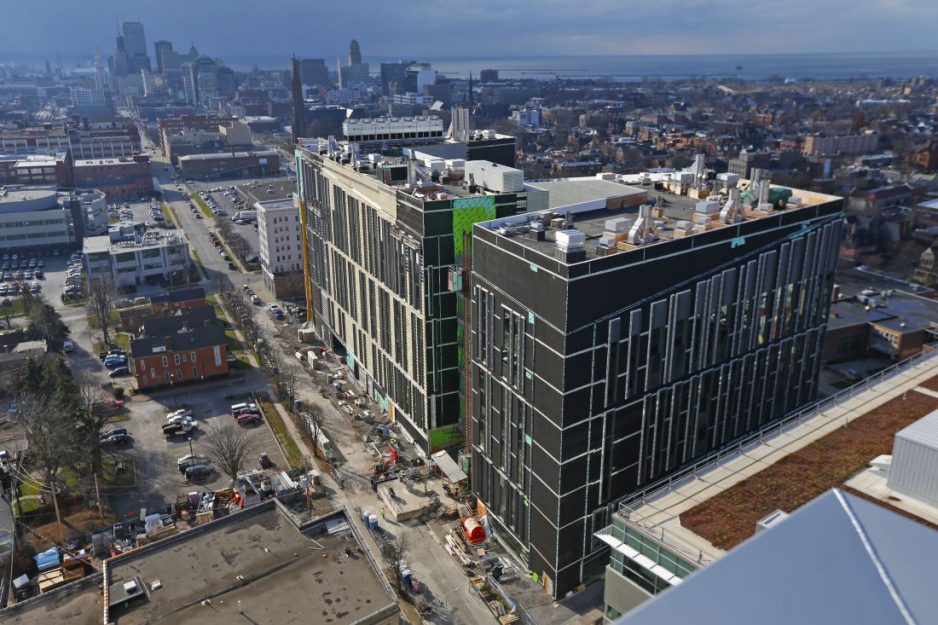
The 12-story, 410,000-square-foot facility has 185 beds. It is smaller than the existing Children’s Hospital on Bryant Street but is designed to give patients, their families and staff a better experience.

In November, the Children’s Hospital inpatient and emergency departments will make the highly choreographed shift to 818 Ellicott St.

[Gallery: The John R. Oishei Children’s Hospital]

The University at Buffalo this fall is expected to complete its Jacobs School of Medicine and Biomedical Sciences, a $375 million undertaking that began in October 2013. The eight-story, 628,000-square-foot building is the largest construction project in UB’s 170-year history.

The new school will bring 2,000 students, faculty and staff to the Medical Campus from their current home on UB’s South Campus once it is finished. The building is 75 percent complete now.

[Gallery: UB Jacobs School of Medicine and Biomedical Sciences]

Many other projects will take shape on the Medical Campus in 2017. Notable projects include:

• Construction should begin in March on the $90 million Campus Square project, a redevelopment of the 12-acre Pilgrim Village affordable housing complex into a community with apartments, commercial space and parking.

• The Medical Campus should begin renovations to 980 Ellicott St. this spring and complete them by the end of the year. The complex has a mix of office and laboratory space.
The organization acquired the facility because it is running out of room in its Thomas R. Beecher Jr. Innovation Center, an incubator for startups. The campus spent $3.75 million to buy the buildings at Ellicott and Best streets from Osmose Holdings.

• Ciminelli Real Estate Corp. has selected a design for an 11-story medical and research building to cost up to $140 million. The architectural firm Perkins + Will is designing the new clinical, research and office building at 33 High St., the site of the old Langston Hughes Institute building, which will be torn down. The project is across the street from Ciminelli’s successful Conventus medical research and office building, at Main and High streets, and the new building would be similar in size and scope. The developer said it hopes to begin construction on the project in 2017.


Local Small Businesses Interested in Providing Goods and Services to Buffalo Niagara Medical Campus Institutions Sought for Business Enterprise Fair

FOR IMMEDIATE RELEASE
September 2, 2016                                                           

For more information, contact:

Susan Kirkpatrick, BNMC Inc. skirkpatrick@bnmc-old.local

716.566.2339/716.866.8002(m)

Local Small Businesses Interested in Providing Goods and Services to Buffalo Niagara Medical Campus Institutions Sought for Business Enterprise Fair  

Event to Connect Local Vendors with Buffalo Niagara Medical Campus

 Institution Purchasers with a focus on Minority, Women and Veteran-owned business

Buffalo, N.Y., September 2, 2016 – Local small businesses interested in doing business with institutions and businesses on the Buffalo Niagara Medical Campus are encouraged to participate in the Business Enterprise Fair to be held on September 20 at UB’s Arthur O. Eve Educational Opportunity Center on the Medical Campus.

The Business Enterprise Fair will provide an in-person forum to connect local vendors, particularly minority, women and veteran business owners, with those who make purchasing decisions for organizations based on and around the Buffalo Niagara Medical Campus. Purchasers include the City of Buffalo, University at Buffalo, Roswell Park Cancer Institute, Kaleida Health, and more.

The event is free to small businesses and will provide an opportunity to highlight products and services and to make personal connections with purchasers from the major Campus institutions. A previous Business Enterprise Fair held in late 2014 resulted in a number of new relationships and business opportunities for local vendors.

Vendors must commit to participating from 1 pm – 5 pm on Tuesday, September 20 and will be provided a table to display information. Free parking will be available at the Gateway Building at 77 Goodell Street and at the parking lot at 589 Ellicott Street across from the Innovation Center.

The Business Enterprise Fair is hosted by BNMC Works, a collaboration of BNMC institutions including the University at Buffalo, Kaleida Health, Roswell Park Cancer Institute and the BNMC, Inc, in partnership with the City of Buffalo and the Small Business Association. The mission of BNMC Works is to increase employment of local residents and to increase the purchase of goods and services from local suppliers by organizations located on the Medical Campus.

To learn more and sign up for the Business Enterprise Fair, go to www.bnmcworksvendorfair.eventbrite.com.


Buffalo Niagara Medical Campus Offers “Walking on Wednesdays”

1934723_10153808804358351_1647284586645084418_n
MEDIA ADVISORY

CONTACT:  Susan Kirkpatrick

skirkpatrick@bnmc-old.local/716-866-8002


Buffalo Niagara Medical Campus Offers “Walking on Wednesdays”

Free guided tours offer lunchtime exercise and an insider’s guide to the growing Medical Campus


What: “Walking on Wednesdays” (W.O.W.) is a series of free guided tours of the Buffalo Niagara Medical Campus in Downtown Buffalo every Wednesday throughout the summer in partnership with The Wellness Institute of Greater Buffalo.  A representative from the Wellness Institute will guide the tours each week in conjunction with a guest tour guide from the Medical Campus.

When:  Each Wednesday at 12:10 PM – 12:40 PM. June 1 through August 31, 2016. Rain or Shine!

Where: All Walks begin and end at Roswell Park Cancer Institute’s Kaminski Park, located at Carlton and Elm Streets. A weekly Farmers Market is also offered there between 11 AM – 2 PM on Wednesdays!

Who: The Walks are ideal for employees on the Medical Campus, as well as for visitors and the interested public and will be led by a variety of guest tour guides.  June guides and topics include:

June 1 – Mark McGovern, BNMC’s Senior Project Manager/Construction Update

June 8 – Justin Booth, GObike Buffalo’s Executive Director/Biking infrastructure along Main Street

June 15 – Matt Enstice, BNMC’s President & CEO along with Tom Beecher, Chair Emeritus/Medical Campus history and progress

June 22 – Craig Coyne, Senior Planner at Roswell Park Cancer Institute/RPCI’s new Clinical Sciences Center

June 29 – Ekua Mends-Aidoo & Sarah Warner, Buffalo Niagara Medical Campus/Neighborhood Explorer program overview

Coordinated by the Wellness Institute of Greater Buffalo and sponsored by the Buffalo Niagara Medical Campus, Inc.


Why:  Add to your “step count”

Get a break from your workplace

Refresh your spirit

Enjoy the fresh air and Buffalo’s beautiful summer weather

Learn more about the Buffalo Niagara Medical Campus

Learn more:   Visit bnmc-old.local/wow

About: The Buffalo Niagara Medical Campus, Inc. (BNMC Inc.) is a self-sustaining social enterprise successfully combining innovation, job creation, and urban revitalization. It serves as the umbrella organization of the anchor institutions that make up the Buffalo Niagara Medical Campus located within the 120-acre campus bordering Allentown, the Fruit Belt and Downtown. The BNMC Inc. fosters conversation and collaboration among its member institutions, its partners and the community to address critical issues impacting them, including entrepreneurship, energy, access and transportation, workforce and procurement, neighborhoods, and healthy communities, with the goal of increasing economic development and building a strong community. bnmc-old.local.


# # #